 English

 Stays
Stays Car Rental
 Rewards
 Travel Guide
  Contact
How the 2026 FIFA World Cup Draw Will Work


The 2026 FIFA World Cup marks the most significant transformation in the tournament’s history. For the first time, the men’s World Cup will feature 48 national teams and be co-hosted by the United States, Canada, and Mexico. With that expansion comes a redesigned draw process, reshaping how teams are grouped and how the tournament unfolds from the opening match to the final.
The official draw sets the competitive framework of the World Cup, determining group composition, potential knockout paths, and early storylines long before the tournament begins.
Purpose of the World Cup Draw

The World Cup draw assigns qualified teams into groups for the opening stage of the tournament while maintaining competitive balance and respecting confederation rules.
For 2026, FIFA has approved a 12-group format, replacing the 32-team structure used between 1998 and 2022.
Group Stage Format
- 48 teams are divided into 12 groups of four
- Each team plays three group-stage matches
- Groups are labeled A through L
This structure was finalized after FIFA abandoned an earlier proposal for 16 groups of three, which raised competitive and scheduling concer
How Teams Advance From the Group Stage
The expanded format allows more teams to progress beyond the group phase:
- The top two teams from each group qualify automatically (24 teams)
- The eight best third-placed teams also advance
In total, 32 teams move on to the knockout stage.
Knockout Stage Structure
A major innovation at the 2026 World Cup is the introduction of a Round of 32, expanding the elimination phase.
The knockout rounds will follow this sequence:
- Round of 32
- Round of 16
- Quarterfinals
- Semifinals
- Final
Teams reaching the final will play up to eight matches, the highest total ever in a men’s World Cup.
Draw Pots and Seeding
While FIFA has not yet released the final draw regulations, the process is expected to follow established principles:
- Teams will be divided into four draw pots of 12
- Pot placement will be based primarily on the FIFA Men’s World Rankings at the time of the draw
- The three host nations — United States, Canada, and Mexico — will be seeded
Beyond host placement, no additional protected seeding has been formally announced.
Confederation Restrictions
To preserve geographic diversity and competitive integrity, FIFA enforces confederation limits:
- Teams from the same confederation cannot be drawn into the same group
- UEFA is the sole exception, with a maximum of two European teams per group
These rules apply across all pots.
Playoff Teams and Placeholder Positions
At the time of the draw, not all 48 participants may be known.
- Final qualification places will be decided through:
- Confederation-specific playoff systems
- An inter-confederation playoff tournament awarding the final two spots
- Teams yet to qualify will be represented by placeholder entries, allowing the draw to proceed on schedule
Total Matches and Tournament Length
- 104 matches will be played across the tournament
- The competition is expected to span approximately 39 days
- This makes 2026 the largest and longest FIFA World Cup ever staged
Why the Expanded Format Matters
Supporters of the new structure point to:
- Greater global representation, particularly for Africa, Asia, and CONCACAF
- More knockout matches and high-stakes moments
Increased opportunities for emerging football nations
Concerns and Criticism
Supporters of the new structure point to:
- Greater global representation, particularly for Africa, Asia, and CONCACAF
- More knockout matches and high-stakes moments
- Increased opportunities for emerging football nations
World Cup Draw Timing and Location
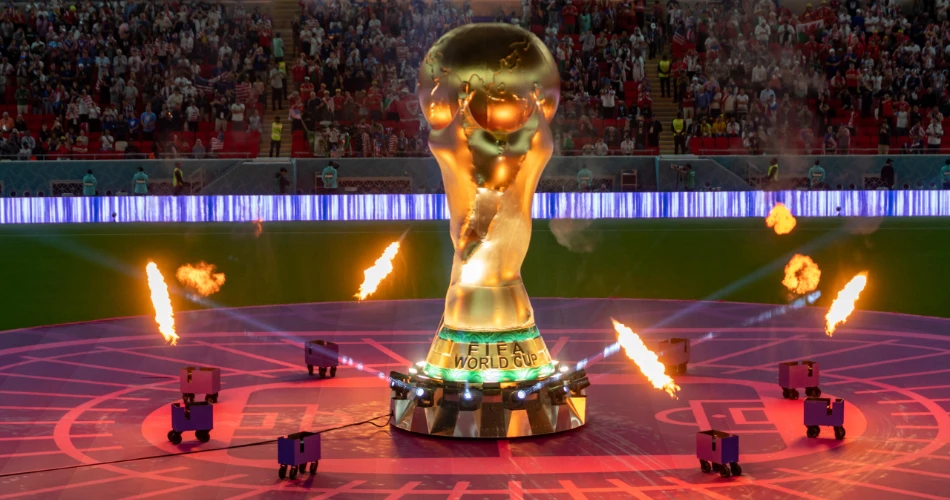
FIFA has indicated that the 2026 World Cup draw will take place in late 2025, though the exact date, host city, venue, and broadcast details have not yet been officially announced. Once confirmed, the draw is expected to be streamed globally on FIFA’s digital platforms.
With 48 teams, 12 groups, a Round of 32, and 104 matches, the 2026 FIFA World Cup introduces a scale and complexity never seen before in the tournament’s history. While certain procedural details will be finalized closer to the draw, the core structure is firmly in place — setting the stage for the most inclusive World Cup ever.