 English

 Stays
Stays Car Rental
 Rewards
 Travel Guide
  Contact
When the World Cup Trophy Was Stolen: A True Story of Loss and Mystery

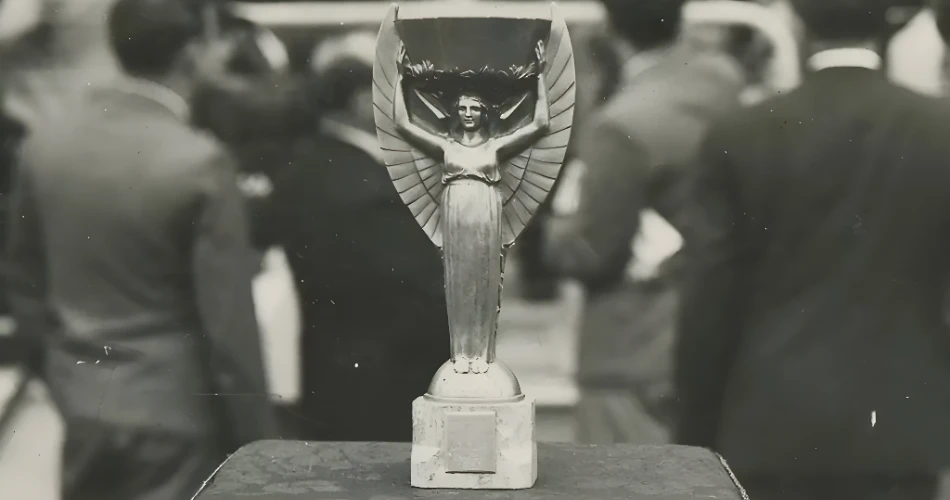
The FIFA World Cup has always delivered drama—goals, heartbreak, and moments etched into sporting history. Yet one of the most astonishing chapters in World Cup lore unfolded far from the pitch. In early 1966, just months before the tournament was set to begin in England, the original World Cup trophy vanished without a trace. No final whistle. No crowd. Just an empty display case and a nation in disbelief.
The disappearance of the Jules Rimet Trophy sent shockwaves through football’s governing bodies, British authorities, and fans worldwide. How could the most recognizable symbol of the world’s biggest sporting event simply disappear? What followed was a real-life thriller involving Scotland Yard, ransom demands, tabloid frenzy, and an unlikely four-legged hero.
World Cup Trophy: More Than Just Gold

The Jules Rimet Trophy was far more than a piece of silverware. Introduced in 1930 and named after FIFA president Jules Rimet, it symbolized global football supremacy for four decades. Crafted from gold-plated silver and depicting the Greek goddess Nike, the trophy was awarded to every World Cup champion from Uruguay in 1930 to Brazil in 1970.
By 1966, the trophy had already traveled the world, handled by legends and lifted in moments of national triumph. Its disappearance threatened not only the integrity of the upcoming tournament but also the image of the World Cup itself.
The Setting: London, March 1966

In the build-up to England’s first time hosting the World Cup, organizers placed the Jules Rimet Trophy on public display at Central Hall Westminster in London. Visitors could view the trophy up close, protected only by a glass case and a basic alarm system. Notably, there was no permanent security guard on site.
On March 20, 1966, during the hall’s closing hours, the unthinkable happened. The trophy was stolen. No alarm was heard. No suspect was seen. The centerpiece of world football had vanished in silence.
A Nation in Shock
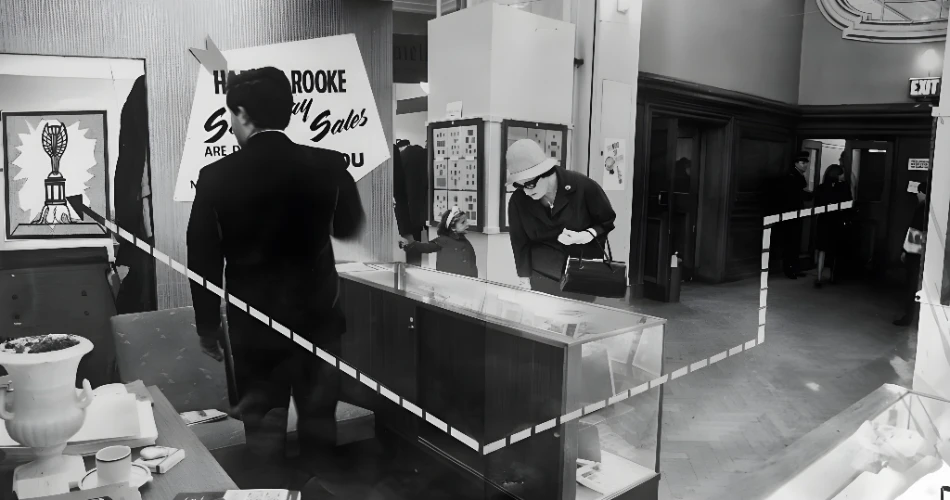
Scotland Yard immediately launched a full-scale investigation. Officers questioned staff, examined the venue, and scoured nearby areas. British newspapers splashed the story across their front pages, fueling speculation and public anxiety. Was it an international plot? An inside job? Or simply an audacious local thief?
Tensions escalated when the Football Association received a ransom letter demanding money for the trophy’s return. With the World Cup fast approaching, the pressure on organizers intensified. The idea of hosting the tournament without its iconic prize was unthinkable.
An Unlikely Hero Named Pickles

Relief came from the most unexpected source. A few days later, a dog named Pickles, owned by London cab driver David Corbett, sniffed out a suspicious package while out on a walk. Wrapped in newspaper and hidden beneath a hedge was the missing Jules Rimet Trophy—intact and undamaged.
The discovery made national headlines. Pickles became an instant celebrity, hailed as the savior of the World Cup. Authorities later arrested the culprit, and security around the trophy was permanently strengthened.
Just months later, England hosted the tournament as planned and went on to win the final 4–2 against West Germany at Wembley Stadium. The trophy Pickles helped recover was lifted in one of football’s most iconic moments.
A Story That Still Captivates
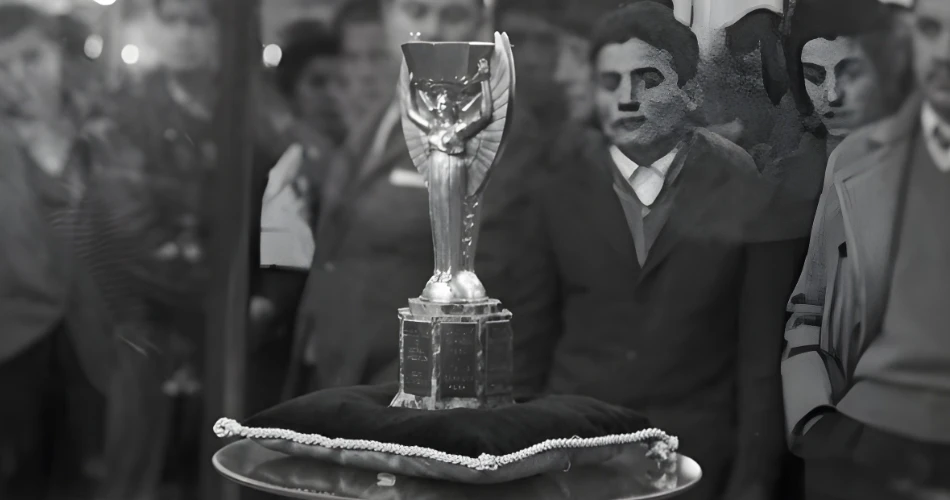
The theft of the Jules Rimet Trophy remains one of football’s strangest and most compelling true stories. It serves as a reminder that the World Cup’s drama isn’t confined to the field—and that sometimes, history turns on the instincts of an ordinary dog.